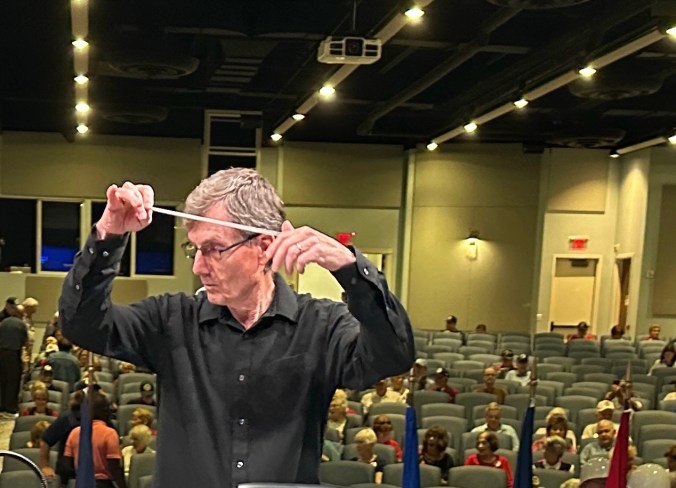
If we’re totally honest, we have to admit that formal music education is (not should be) the systematic process of reproducing other people’s creative output. I base this statement on an inventory of what most, though certainly not all, time is spent doing during music classes and rehearsals. For rehearsals, students practice individual or solo parts of ensemble music written by someone else. These parts are written out on published sheet music, with every detail specified, including pitches, rhythms, phrasing, dynamics, tempo, and expressive terms such as dolce or maestoso. In addition to these specifications, the conductor prescribes their interpretation, teaches the students how to perform that prescribed interpretation, along with the notes, until a level of achievement desired for a public performance is reached.
I realize that the previous description is somewhat extreme, and that some educators dialogue with students regarding interpretation, but the fundamental premise still remains. The objective is to reproduce a composer’s intent, and that composer is not one of the performers.
General music classes are sometimes less stringently exercises in musical reproduction, but that purpose is still prevalent. Songs taught by rote, songs taught from notation, listening and responding to other people’s music. While a strength of, and indeed a justification for the arts in education is that they supposedly that they foster creativity, that creativity is largely in the form of interpretation, not creating.
There are legitimate reasons why this has come to be. Public school music programs often need to justify their existence through remaining highly visible in communities by giving public performances for civic organization, athletic events, community parades, board of education meetings, and so forth. Music educators can easily become squeezed for time keeping performing groups ready to answer these requests, often with little advance notice. This makes teaching music composing difficult, because it can be time consuming. But it is time consuming because it is often though of as an add-on. Something that students can pick up on the side, or as one decides to take an elective course in a related subject. But learning to create music doesn’t work that way.
The ability to create music is an outgrowth of having listen to, interacted with, and performed music over an extended period of time. It is not something a person can come at as something totally new, and pick up on. Composing music is an act of assimilation. It is an act of gathering bits of remembered music and imposing a direction, form, and syntax those bits suggest so that new music is created, appended to the memories which themselves become reinvented in the process.
In 1974, when I was a high school student, I wrote a piece for concert band. My band director allowed me to conduct a reading of it. The theme from that composition is now a musical memory. Separated by many years since that original composition, I have returned to it in a recent composition. The theme is nearly the same, with just the last interval changed in it’s new form, but the treatment is wholly new, reshaped from years of musical experiences into something I couldn’t possibly written fifty-one years ago. The original was this:
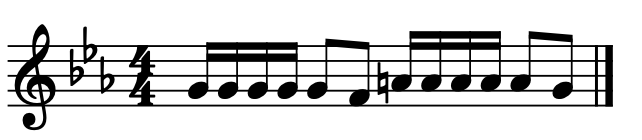
It proceeded by imitating that theme on different transpositions, traveling around the band to different sections. The space between entrances gradually got smaller, creating a sort of fugal stretto effect. The new piece begins like this:
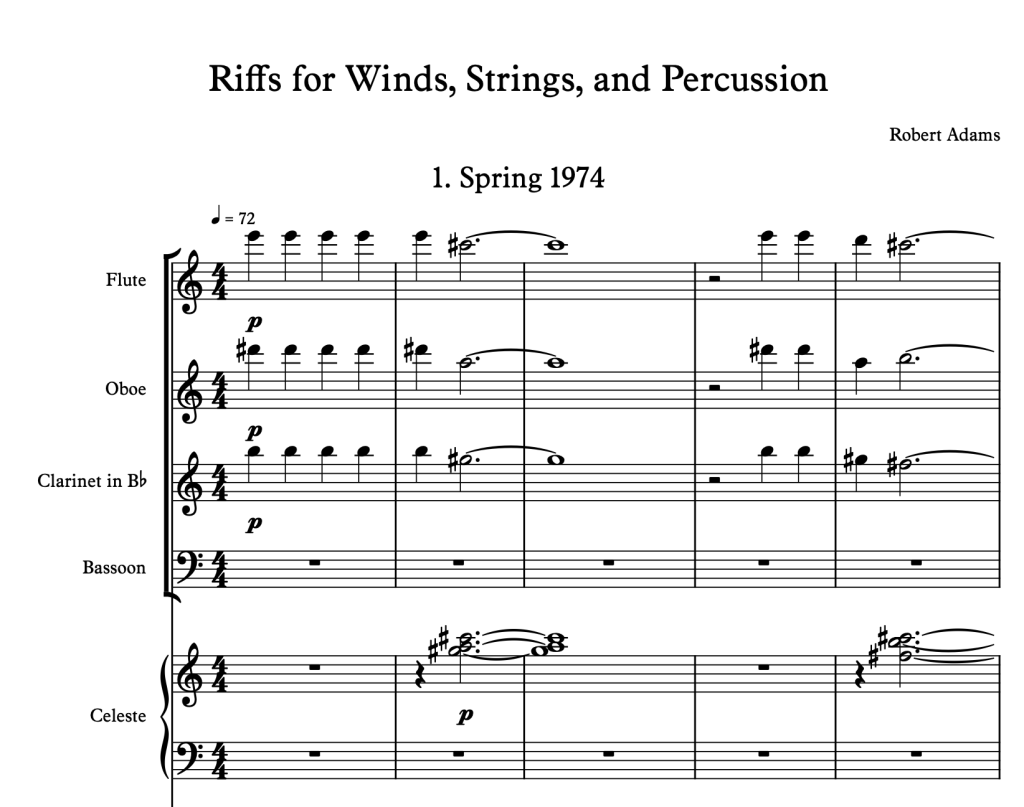
and develops into gestures like this:
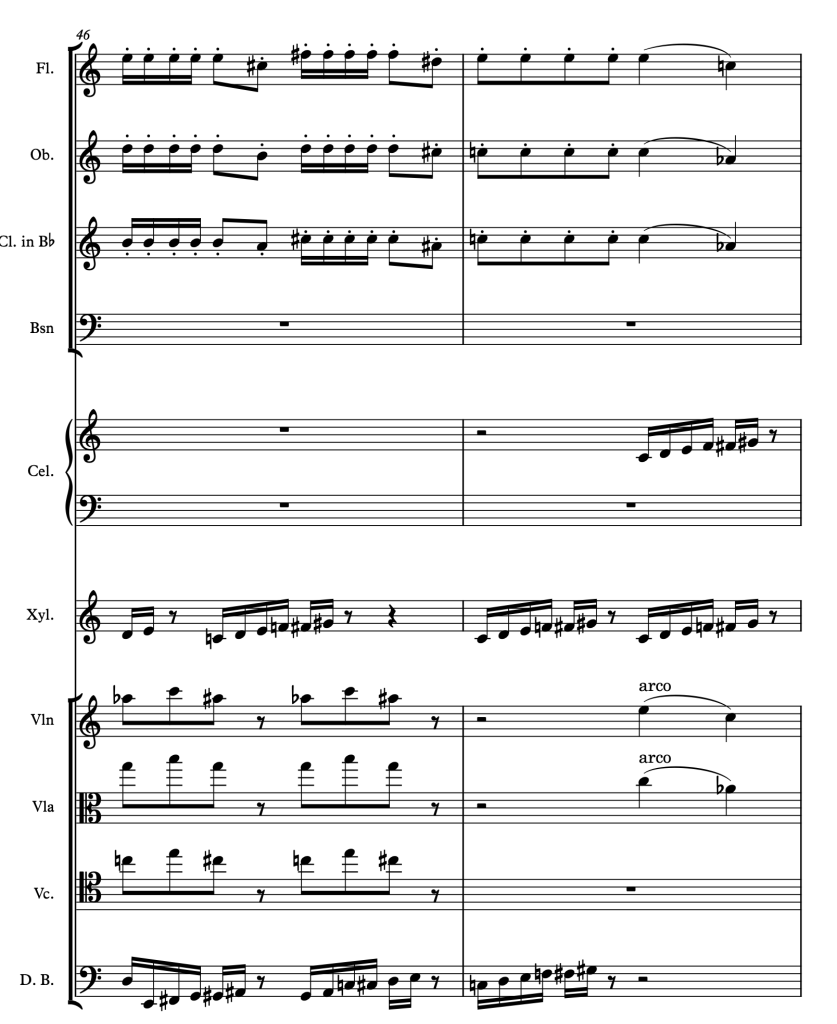
The relative sophistication of the recent composition shows the effects of fifty years of engagement with music. Fifty years during which I have composed many pieces, most of them for winds and/or strings. Most of those compositions are in some way responses to music. Not the kind of responses students make in a classroom on a written assignment, or by following a listening chart while listening to Mozart or Queen, but responses of playing with ideas in imagination, experimenting with them, humming, tapping, scribbling a motif on a scrap piece of paper, and just waiting for all of it to percolate into something that begins to take the shape of a logical musical composition.
None of this happens quickly. It takes time. Time that teachers don’t have to devote to it in classes. So the job of the music teacher becomes inspiring students to love music enough to want to create it, to want to listen and explore and experiment outside of class, the way a high school guitarist spends time with his instrument when he’s not in band, chorus or orchestra in school. That’s the real music education.
What the teacher equips the student to do on their own and for the rest of their life. Students leave the band trophies in the band room when they graduate, but they take with them what their musical experience mean to them once they move on. Mine meant enough for me to keep going with them, nurtured by a music teacher who took an interest in me and gave me a chance to find out what my idea sounded like. Because of that opportunity, Riffs for Winds, Strings and Percussion exists, along with chamber and full band pieces.
So what can you do in the classroom to plant this creative seed? Be creative yourself. Try composing. It doesn’t matter if you haven’t composed before, or even if you think you’re any good at it. Start composing, and share what you’re doing with your students. Invite them to join you. When you give them a composing task, you do it too. Put an antecedent phrase in front of you and them, and everyone compose a consequent phrase. Put a short melody on the board, as simple a melody as you can come up with, and everyone compose one variation, then share. Put all your variation together and make one theme and variations piece out of it and perform it for yourselves.
Encourage brainstorming. You can work with any musical idea. You’ll be amazed what you and they come up with. Soon, some students will begin coming in, excited to show you something they composed at home. Students will thrive in this kind of environment. Some will reveal themselves as outstanding composers. But that’s not the goal The goal is to get everyone, including you, creating music and love doing it.
Share lots of music with your students to keep refilling their imaginations with new experiences, and be willing to let them introduce you to music and help you refill your imagination. Creativity needs exploration, and exploration means traversing into the unknown. There can be no fear of failure, and there doesn’t have to be if there is no possibility of failing. You can work with any musical idea. Remember that. You can take anything and play with it. Don’t just play music, play with music.
If you’d like to listen to the first movement of Riffs for Winds, Strings, and Percussion, click here. Look for the complete work (3 movements) soon at JW Pepper.

