
We’ve all seen composers or writers in movies or plays. They sit down at a piano, or a computer, (typewriter if it’s an older play) and attempt to write. There are several false starts. Sheets of paper get torn from the sketchbook or typewriter. They get rolled up into a ball and pile up in a waste basket. The author looks to be on the brink of going mad. Will he ever be able to make a start of it? Then are the stories, fables maybe, of Mozart taking dictation from himself, effortlessly writing down music exactly as it flows out of him. No revisions, nothing scratched out. Perfect the first time. In the movie Amadeus, we see Mozart dictating a movement for his Requiem to Salieri, seated at Mozart’s bedside.
But that’s not how it really happens, and any author shouldn’t expect it to. Sitting down at a computer with either word processing or music notation or DAW software doesn’t automatically open the creative floodgates. One cannot simply sit down and decide to write a play or a libretto or a song or a symphony. That’s why composers, before computers, carried sketchbooks around with them, and now have versions of music notation software or recording software installed on their phones or tablets. It’s why visual artists carry sketch pads around with them.
Creating a work of art, be it visual or performing art, requires time, just as coffee needs time to brew, and tea needs time to steep. It all starts with an idea. A motif, an image, a bit of environmental noise; something that attracts a creative person’s attention. That occurrence or idea goes into a creative mind which sets about working on it for days or weeks or more. A composer takes a sequence of imagined sounds (for once they are present only in memory, they are no longer physically present but only imagined) and plays with them, twisting, turning, deconstructing, dissecting, audiating and assembling until there is enough material prepared to warrant using that computer, or music paper, or canvass to begin giving concrete form to the as yet unrealized work.
It is a process, much like the rehearsal process of an actor or musician, except that the composer traverses the process privately, unseen even by fellow composers, until one day he gets what has been in the works for weeks in his mind onto paper or computer screen. It may come out in one or more impressive gushes, but that is not spontaneous “Amadeus-like” composing. It is the inevitable release of creative power that until now has found no outlet but now is freed of the inner-life and brought out in a sort of private public, the composer’s manuscript.
I observe this very thing in myself. Before I’ve even decided to compose something new, I will find myself humming to myself incessantly for days at a time, whereas ordinarily, I hardly do that at all. Musical ideas start to come to mind. I begin riffing to myself, playing with different ways to render one or two ideas. But this is never intentional composing. It’s something I catch myself already doing it, and once I’m aware of it, I stop soon after, because at that point what my subconscious is doing is better than what I can do on purpose! I just recognize that in a few days I’ll be sitting down at my computer with something to put into Dorico. It’s encouraging and exciting to be fairly certain that a new composition is on the way, but it can’t be rushed. I must wait for the music to come to me. To try and force it leads to futile failures and those false starts that the struggling writers of movies suffer through.
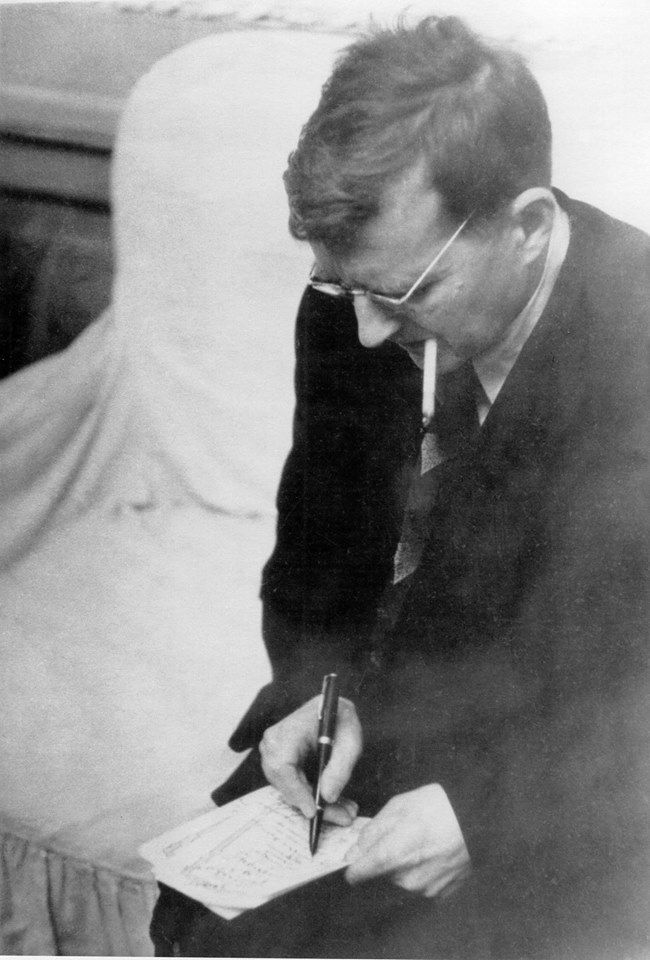
I know this doesn’t happen with everyone, or even with every musician. I don’t know why it happens with me. I’ve always had a love for music, and a desire to be a musician. I distinctly remember an older boy named Stephen who made a point of sitting next to me on the school bus every day, just so he could make fun of me when I started to hum out loud to myself. My thoughts were in music even back then when others’ were in words. But the point is not that I’m some sort musical genius or that I was. musical prodigy. Far from it. The point is that music starts with an idea, and develops, evolves, grows through a thought life that permits unfettered play with sounds, and that the play leads to the composition, and without the play there is no composition.
Another interesting observation I’ve made about musical play is that it all takes place within the range of my voice, and it frequently pulls in characteristics from my favorite styles and even composers. This is something jazz improvisors know to be true. Improvisation is not the gearing of wholly original ideas on the fly. It is the repurposing of riffs, rhythms, motifs and themes that are already known and have become part of the cognitive musical playground. Composers will create music that can naturally evolve from what they know and like best.
So what are we to conclude from all of this as it relates to teaching students music? There are two points to be made. First, students need to have well-developed music skills before they are asked to compose. Creating music is the most advanced musical action. It should not be asked of students who are inexperienced or struggling with singing on pitch, reading music, or successfully doing basic, simple improvising. Second, students should be encouraged to compose music that is rooted in music with which they are familiar and to which they enjoy listening. Asking students to write an arioso in the style of Bach is bad pedagogy unless a students the son or daughter of a Baroque keyboardist and has grown up saturated in that composer’s music.
Thirdly, do not assume that all composing must be notated. Most of the world’s music is not written down, even though virtually all of classical music is. The result of musical play is much more important than the requirement of writing it down, though there is nothing wrong with doing so if the student is able. Musical play will always be more advanced than what a student can formally organize into a work, or write down. They will benefit more from being allowed to play and subsequently hearing their creations than by seeing them.
For those of you who are conductors of concert bands or wind ensembles, you may wish to audition my latest compositions. I have recently composed three new marches for concert band. Half Step March exploits minor seconds in the trio, creating a distinctive melodic character while remaining accessible and tonal. Search The House March is a more upbeat march, and suggests the madcap searching and shaming of doors one finds in a theatrical farce. Fly Them High, though it does not contain any patriotic tune, is a tribute to the colors during our national 250 celebration. Here are the links for purchasing the music for your ensemble.
https://www.jwpepper.com/half-step-march-11718782-2894920/p
https://www.jwpepper.com/search-the-house-march-11718783-2894630/p


Thank you so much, well written and easy to understand!